
Svinealarm
A digital tool for civic empowerment alerting residents to proposed pork megafarm expansions in Denmark enabling participation in otherwise obscured environmental decision-makining
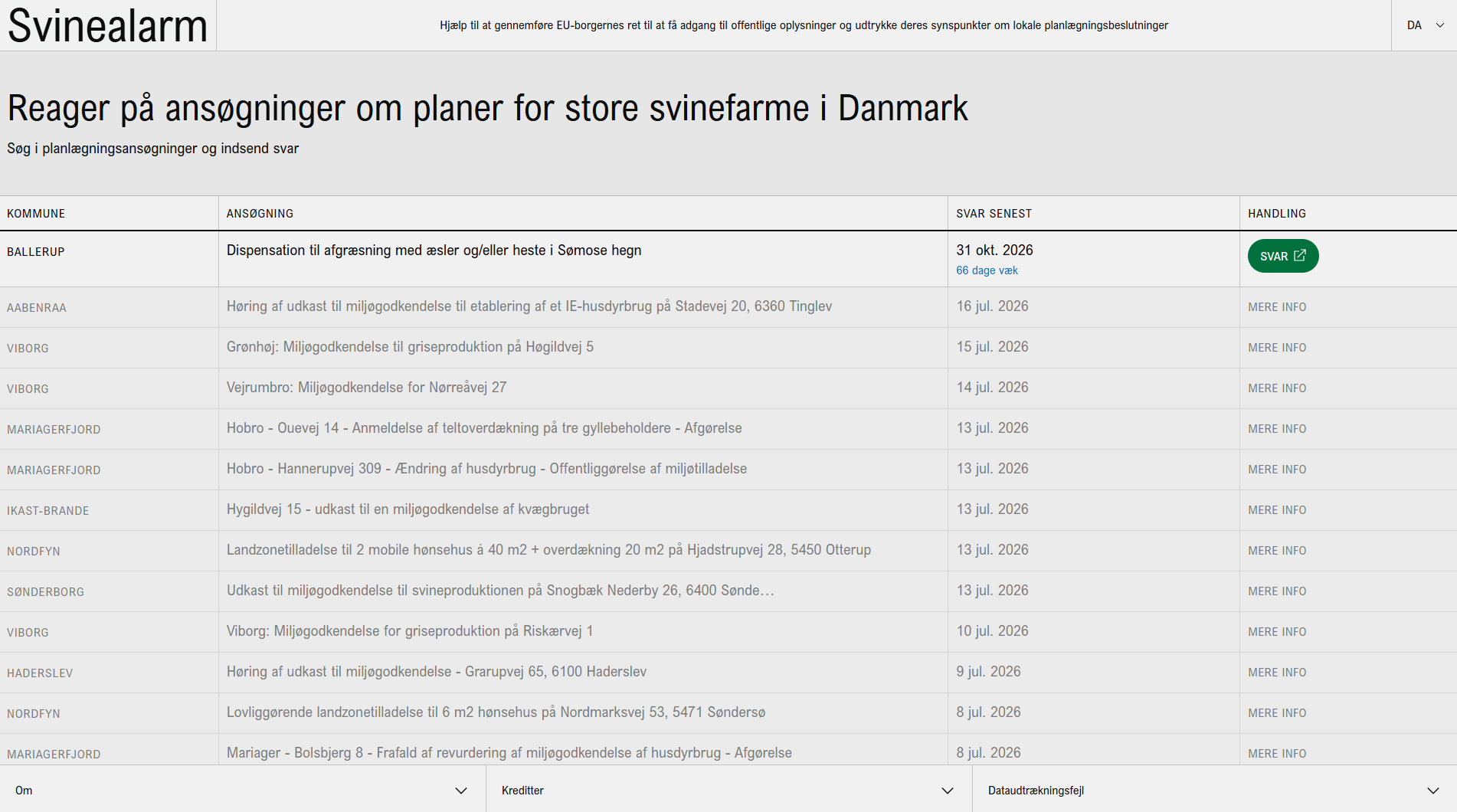
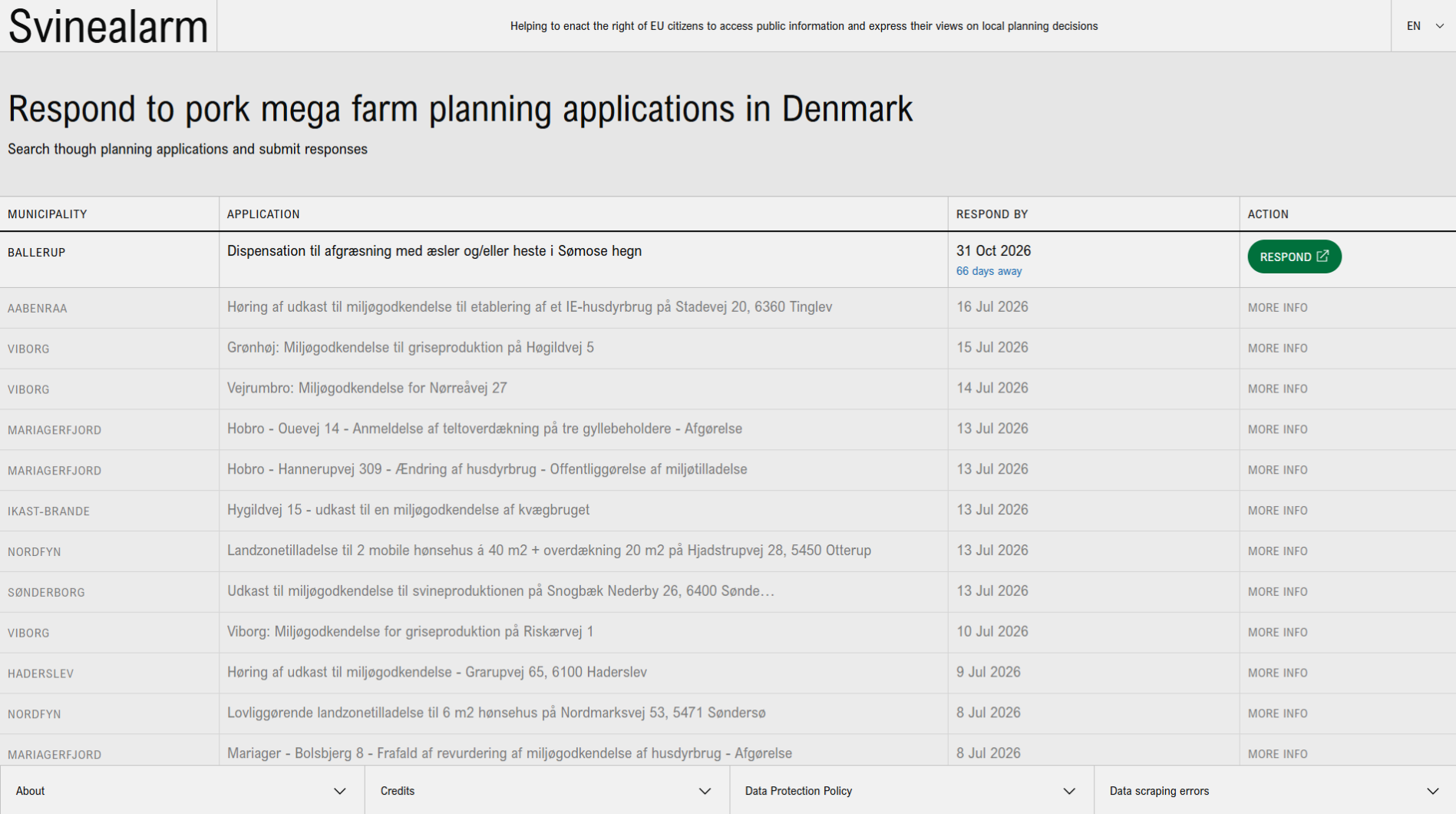 Svinealarm, screenshot from the website
Initiator(s)
Cooking Sections, CLIMAVORE, Aleph², An Endless Supply, MAPS Museum of Art in Public Spaces, anonymous local activists and residents’ groups
Description
Svinealarm is a digital civic empowerment tool providing public access to information on the expansion of the pork industry in Denmark. Developed in collaboration with data scientists and written with input from local activists, farmers and researchers, the website tracks new applications for megafarm licences, maps proposed expansions, and alerts users to deadlines for public consultation. Operating within the framework of the Aarhus Convention on access to information, public participation in decision-making and access to justice in environmental matters, the platform makes dispersed and often difficult-to-navigate planning information on agricultural expansion a more visible and accessible public resource. By scanning for new applications and clarifying when and how to respond, Svinealarm supports residents in exercising their rights to environmental information and participation in planning decisions that aim to transform the surroundings of their homes.
Goals
The Svinealarm platform tracks applications for pork megafarms across Denmark, disclosing agricultural expansions that, though theoretically public, are nonetheless often hidden within complex municipal websites and government portals. The digital portal provides online users with a straightforward link to submit feedback on the construction of pork megafarms, as well as a template for filling a complaint with the relevant local authority. Conceived and implemented as a new commission for the MAPS Museum of Art in Public Spaces, it uses the digital possibilities of machine learning and AI to turn access to environmental information into a tool for civic participation.
Beneficial outcomes
Residents can identify proposed pork megafarm expansions in their area, understand when decisions are being made, and intervene before consultation periods close. Currently, environmental activists perform this tedious task by manually searching and scrolling Denmark’s municipal websites, one by one, every week. By translating dispersed administrative data into accessible alerts, deadlines, and tools for response, Svinealarm enables environmental rights to be exercised in practice. It creates a shared public record of how industrial pork production is transforming land, water, towns, and agricultural landscapes across the country, while setting a precedent for similar tools and struggles in other European countries.
Location
Denmark (available online worldwide)
Users
Residents affected by proposed farm expansions, farmers, environmental groups, local activists, researchers, and members of the public participating in municipal planning and environmental decision-making.
Maintained by
Cooking Sections, CLIMAVORE, Aleph², An Endless Supply
Duration
2026 - ongoing
Category
Scientific
Pedagogical
Politics
Urban Development
Economy
Environment
Social


